

Indonesia real estate sector is governed by a complex legal framework that regulates land rights, spatial planning, and property development activities. This article outlines the core legal framework governing real estate activities and highlights key regulatory considerations for developers, investors, and practitioners.
Table of Contents
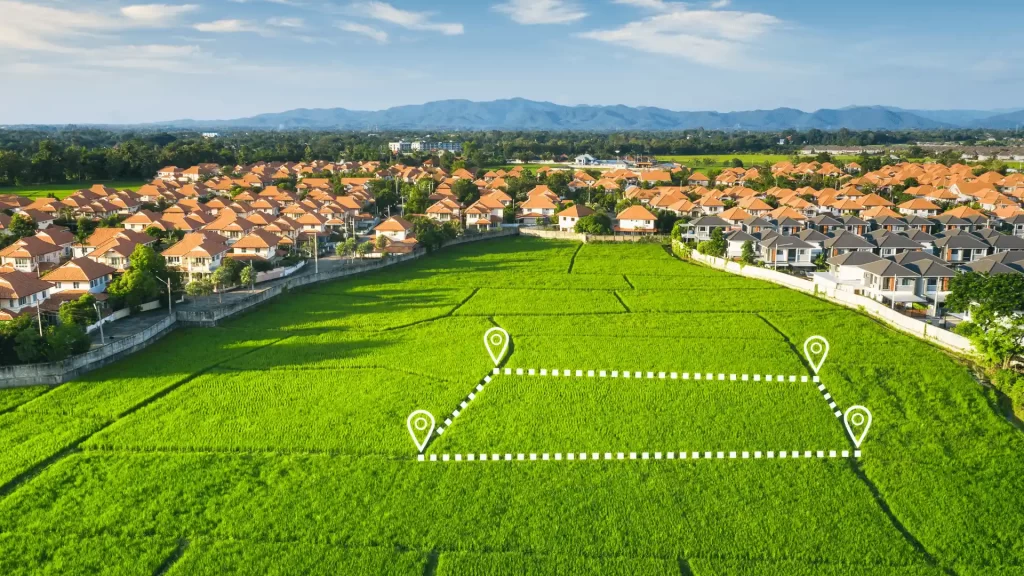
Land law aspects constitute one of the main foundations in the development of the real estate industry in Indonesia, where the real estate industry in Indonesia continues to grow rapidly in line with the increasing demand for housing, business space, and investment. Through Law Number 5 of 1960 concerning Basic Agrarian Principles (“Agrarian Law”), the state regulates various types of land rights, ranging from right of ownership, right to cultivate, right to build, and others, in order to ensure that land utilization runs in accordance with the principles of justice and prosperity for all people. With the enactment of Law Number 6 of 2023 concerning the ratification of the Government Regulation in Lieu of Law Number 2 of 2022 concerning Job Creation into Law (“Job Creation Law”), a number of provisions regarding the control, granting, and transfer of land rights have undergone harmonization and updates to adjust to developments over time. Based on this, this article will provide an overview of the land which includes land rights, coastal areas and small islands, reclamation land, and destroyed land, spatial planning, business licensing in the context of basic requirements, commercial and industrial aspects of land rights which include houses, condominiums and industrial estate, as well as the utilization, maintenance, and upkeep of buildings, including condominium.
Land
Land Rights
The Agrarian Law clearly regulates matters concerning land rights. Therefore, it is necessary to first understand the classification of land rights, which includes:
- Right of ownership;
- Right to cultivate;
- Right to build;
- Right of use;
- Lease rights;
- Rights to open land;
- Rights to collect forest products; and
- Other rights not included in the rights above, namely mortgage right, profit-sharing cultivation right, lodging right, and agricultural land lease right, which are regulated in order to limit their characteristics that are contrary to the UUPA, and such rights are intended to be eliminated within a short period of time.
Based on the explanation above, it is known that there are various types of land rights. To gain a deeper understanding of these rights, this section will further discuss them with a focus on the right of ownership, right to cultivate, right to build, right of use, and right of management.
Each type of land right has distinct characteristics, particularly when viewed in terms of the parties entitled to hold such land rights and the duration of validity of each land right.

Right of Ownership
Right of ownership is primarily regulated in Articles 20–27 of the UUPA. It is first necessary to understand the definition of right of ownership. Rights of ownership are hereditary rights, the strongest and most complete rights that a person may have over land, with due regard to their social function (“Right of Ownership”). However, even though it is the strongest and most complete, Right of Ownership may still be transferred and assigned to other parties. The subjects that may hold Right of Ownership may be individuals or legal entities. Individuals referred to herein are limited to Indonesian citizens. Hence, land under Right of Ownership cannot be acquired by foreign nationals.
Although land under the Right of Ownership may be held continuously, there are circumstances in which the Right of Ownership may be extinguished if:
- the land reverts to the State due to:
- revocation of rights for public interest purposes,
- voluntary surrender by the owner,
- abandonment,
- Foreign nationals or Indonesian citizens who lose their Indonesian citizenship and acquire or hold ownership rights over land who has not relinquished such rights within a period of 1 (one) year; or
- Any legal act that directly or indirectly transfers ownership rights over land to a foreign national, an Indonesian citizen with dual citizenship, or a legal entity not designated by the Government;
- the land is destroyed.
The Right of Ownership is also one of the land rights that may be used as collateral for debt by being encumbered with a mortgage right.

Right to Build
The right to build is regulated in Articles 35-40 of the Agrarian Law. In terms of definition, right to build is the right to construct and own buildings on land that is not owned by the holder (“Right to Build”). Parties who may hold Right to Build are limited to Indonesian citizens or legal entities established under Indonesian law and domiciled in Indonesia. This right enables the holder of Right to Build to construct buildings or commercial facilities. In practice, Right to Build is normally used by housing developers, commercial developers, and private companies that intend to construct shop houses, condominiums, industrial estate, or office buildings.
The technical implementation of Right to Build is further regulated in Government Regulation Number 18 of 2021 concerning Rights of Management, Land Rights, Condominium Units, and Land Registration (“GR Land Right and Condominium Unit”), which serves as the implementing regulation of the Agrarian Law following the enactment of the Job Creation Law.
In principle, land that may be granted with Right to Build includes state land, land under management rights, and land with Right of Ownership. For Right to Build over land with Right of Ownership, the granting is carried out through a deed made by a Land Deed Official. Such deed may be made electronically, and must be registered at the Land Office.
In addition to understanding the procedures for the granting and transfer of Right to Build, it is also necessary to understand the termination of Right to Build over a parcel of land. Right to Build over above-ground space or underground space may be terminated due to:
- the expiration of the term as stipulated in the decision on the granting, extension, or renewal of the right;
- the revocation of the right by the Minister prior to the expiration of its term due to:
- failure to fulfil obligations and/or violation of prohibitions;
- failure to fulfil the requirements or obligations stipulated in the agreement on the utilization of the right of management over above-ground space or underground space;
- administrative defects; or
- a court decision that has obtained permanent legal force;
- the conversion of the right into another land right;
- voluntary relinquishment by the holder of the right prior to the expiration of the term;
- relinquishment for the public interest;
- revocation pursuant to law;
- the destruction of the building/spatial unit and/or the land such that it can no longer be used or utilized;
- the expiration of the agreement for the granting of rights or the utilization of land for the Right to Build or the right of use over the Right of Ownership or the right of management; and/or
- the holder of the right no longer fulfils the requirements as a subject of the right.
The term of the Right to Build over state land and land under the right of management is granted for a maximum period of 30 (thirty) years, may be extended for 20 (twenty) years, and may be renewed for a maximum period of 30 (thirty) years. Having the same term, the Right to Build over land under the Right of Ownership is also granted for a maximum period of 30 (thirty) years, and may be renewed through a deed of granting of the Right to Build over the Right of Ownership.

Right to Cultivate
The right to cultivate is the right to cultivate land directly controlled by the state for agricultural, fisheries, or livestock purposes (“Right to Cultivate”). The Right to Cultivate is limited to Indonesian citizens and Indonesian legal entities established under Indonesian law and domiciled in Indonesia.
Similar to Right to Build, the Right to Cultivate also has a term of 35 (thirty-five) years, may be extended for 25 (twenty-five) years, and may be renewed again for a maximum of 35 (thirty-five) years. Upon the expiration of the granting, extension, and renewal periods, the land reverts to land directly controlled by the state or land under the right of management. Right to Cultivate is granted over land with a minimum area of 5 (five) acres, with the condition that if the area is 25 (twenty-five) acres or more, it must involve adequate capital investment and the application of sound cor”orat’ techniques in accordance with developments of the times. Further, the holder of Right to Cultivate is obligated to properly manage Right to Cultivate land in accordance with business feasibility based on criteria determined by technical institution, as well as the obligation to facilitate the development of community plantation of at least 20% (twenty percent) of the Right to Cultivate land area with a minimum area of 250 (two hundred and fifty) acres held by a legal entity in the form of limited liability company for plantation businesses.
A land that may be granted Right to Cultivate consists of state land and land under management rights. Right to Cultivate over state land must be granted by a decision on the granting of rights issued by the Minister. Meanwhile, Right to Cultivate over land under management rights is granted by a decision on the granting of rights issued by the Minister, based on the approval of the holder of the management rights.
It should be understood that the granting of Right to Cultivate must be registered at the Land Office. Furthermore, similar to the Right of Ownership and Right to Build, the Right to Cultivate may also be used as an object of mortgage right.
From the explanation above, it is understood that the Right to Cultivate may be terminated due to the following reasons:
- the expiration of the Right to Cultivate term as stipulated in the decision on the granting, extension, or renewal of the right;
- the revocation of the right by the Minister prior to the expiration of its term due to:
- Failure to fulfil obligations and/or violating the prohibitions stipulated in the GR Land Right and Condominium Unit e.g., the obligation to cultivate and manage the land in accordance with the designation and requirements stipulated in the decision to grant the rights no later than 2 (two) years from the date of granting, business feasibility, building and maintaining environmental infrastructure; maintaining the land; providing access for surrounding land that is enclosed; protecting conservation functions (which are of high value and water body boundaries or other conservation); compliance with spatial plan; facilitating community plantation of at least 20% of the Right to Cultivate area; submitting Right to Cultivate utilization reports at the end of each year; releasing land if needed for public interest. Furthermore, Right to Cultivate holders are prohibited from transferring the utilization of Right to Cultivate land to other parties without a legal basis, confining or closing yards or other land areas from public traffic, public access, and/or waterways, opening or cultivating land by burning, damaging natural resources and the environment, abandoning land, and constructing permanent buildings that reduce conservation functions;
- administrative defects; or
- a court decision that is legally binding;
- the conversion of the right into another land right;
- voluntary relinquishment by the holder of the right prior to the expiration of the term;
- relinquishment for the public interest;
- revocation pursuant to law;
- designation as abandoned land;
- designation as destroyed land;
- the expiration of the land utilization agreement for the Right to Cultivate over land under the right of management; or
- the holder of the right no longer fulfils the requirements as a subject of the right.
In line with the foregoing, the termination of Right to Cultivate status results in the land becoming state land or as determined by the dictum of a court decision.

Right of Use
Right of Use is the right to use and/or collect the yields from land that is directly controlled by the state or land owned by another person, which grants authority and obligations as determined in the decision granting the right by the authorized official or in an agreement with the landowner, which is not a lease agreement or a land cultivation agreement. (“Right of Use”).
A Right of Use consists of:
- Right of Use for a fixed period; and
- Right of Use as long as it is used.
The difference between the two can be seen from the parties authorized to obtain the Right of Use. In this regard, the Right of Use with a specified term is granted to:
- the Indonesian State;
- Indonesian legal entities;
- foreign legal entities that have a representative office in Indonesia;
- religious and social bodies; and
- foreigners or foreign nationals who hold immigration document such as visa, passport, and residence permit.
Whereas the Right of Use for as long as it is utilized is granted to:
- Central Government Institutions;
- Regional Governments;
- Village Governments; and
- foreign state representatives and representatives of international organizations.
In line with the provisions above, the GR Land Right and Condominium Unit also regulates the provisions regarding which types of land may be granted with the Right of Use, with the explanation as follows:
- Land that may be granted with a fixed period includes:
- State land;
- Right of Ownership land; and
- Right of management land.
- Land that may be granted with the Right of Use for as long as it is used includes:
- State land; and
- Right of management land.
In addition to the provisions regarding the parties entitled to hold the Right of Use over land, it is also necessary to understand the term of the Right of Use, namely:
- The Right of Use over state land and right of management land is granted for a period of use of up to 30 (thirty) years, may be extended for up to 20 (twenty) years, and may be renewed for up to 30 (thirty) years;
- The Right of Use over Right of Ownership land is granted for a maximum period of 30 (thirty) years and may be renewed by a deed of granting the Right of Use over Right of Ownership land; and/or
- The Right of Use for as long as it is used is granted for an indefinite period as long as the land is used and utilized.
The termination of the Right of Use may occur under various conditions, namely:
- The expiration of the term as stipulated in the decision on the granting, extension, or renewal of the right, for the Right of Use with a fixed period;
- The cancellation of the right by the Minister before the expiration of its term due to:
- the failure to fulfill obligations and/or the violation of prohibitions, similar to the provisions applicable to Right to Cultivate;
- failure to fulfill the requirements or obligations stipulated in the agreement on the granting of the Right of Use between the holder of the Right of Use and the holder of the Right of Ownership, or the agreement on the utilization of right of management land;
- administrative defects; or
- a court decision that has obtained permanent legal force.
- The conversion of the right into another land right;
- Voluntary relinquishment by the right holder before the expiration of the term;
- Relinquishment for the public interest;
- Revocation based on a law;
- Determination as abandoned land;
- Determination as destroyed land;
- The expiration of the agreement on the granting of the right or the agreement on land utilization for the Right of Use over Right of Ownership land or right of management land; and/or
- The right holder no longer meets the requirements as a subject of the right.
The extinction of the Right of Use land has several different legal consequences. If the Right of Use over state land is extinguished, then:
- the land becomes state land; or
- in accordance with the dictum of a court decision.
For state land, the rearrangement, use, utilization, and ownership fall under the authority of the Minister. For Right of Use land that is extinguished over right of management land, the land returns to the control of the holder of the right of management. Meanwhile, Right of Use land that is extinguished over Right of Ownership land results in the land returning to the control of the holder of the Right of Ownership.
A Right of Use that may be used as security for debt is limited to the Right of Use with a fixed period, whereas the classification of the Right of Use for as long as it is used may not be used as security for debt, and may not be transferred, assigned, or converted into another right.
Right of Management
Right of management is a right of control by the State, the implementation authority of which is partially delegated to the holder of the right of management (“Right of Management”). Right of Management may originate from state land and customary (ulayat) land. The parties that may obtain Right of Management are:
- Central Government Institutions;
- Regional Governments;
- State-owned enterprises/regional government-owned enterprises;
- State-owned legal entities/regional government-owned legal entities;
- Land Bank Agency; or
- Legal entities designated by the Central Government.
Thus, it can be clearly understood that parties not mentioned above, including foreign nationals, are not entitled to Right of Management land.
It should be noted that holders of Right of Management have the authority to:
- Prepare plans for the designation, use, and utilization of land in accordance with spatial planning;
- Use and utilize all or part of the Right of Management land for their own use or in cooperation with other parties; and
- Determine tariffs and/or mandatory annual fees from other parties in accordance with the agreement.
In line with the previous explanation, with respect to Right of Management land of which part or all of its utilization is carried out in cooperation with other parties, land rights in the form of Right to Cultivate, Right to Build and/or Right of Use may be granted over such Right of Management land in accordance with its designation and function. If the utilization of part of the land is carried out through cooperation with a third party, the holder of the Right of Management and the third party are required to set forth such agreement in a land utilization agreement.
Furthermore, Right of Management does not have a specific term because the holder of the Right of Management is appointed based on a decision of the Minister. Nevertheless, the permit for the use of Right to Build/Right to Cultivate over Right of Management land shall follow the term as stipulated in the agreement entered into between the holder of the Right of Management and the third party.
Unlike land with Right of Ownership, Right to Build, Right to Cultivate, and Right of Use, considering that the holder of the Right of Management is appointed by the Minister, Right of Management land cannot be used as collateral by being encumbered with a mortgage right. Based on this, Right of Management land cannot be transferred or assigned to another party. However, there is an exception, namely that the Right of Management may be released in the event that it is granted as Right of Ownership, solely for public interest purposes, or other provisions as regulated under laws and regulations. Furthermore, if the released Right of Management constitutes state-owned property or regional-owned property, the release of the Right of Management shall be carried out in accordance with the applicable laws and regulations. It should be emphasized that all releases of Right of Management must be executed by and before the authorized official and reported to the Minister.
After understanding the provisions on how to obtain Right of Management, it is also important to note that Right of Management may be extinguished. In this regard, Right of Management land may be extinguished due to:
- Cancellation by the government due to administrative defects or the existence of a court decision with permanent legal force;
- Voluntary release by the holder of the right;
- Release for public interest purposes;
- Revocation based on law;
- Granting of Right of Ownership;
- Designation as abandoned land; or
- Designation as destroyed land.
In the event that Right of Management land is extinguished, the status of such land becomes state land or in accordance with the court decision, or if the Right of Management land is located on ulayat land, the status of the land reverts to the control of the customary law community.

Coastal Areas and Small Islands, Reclamation Land, and Destroyed Land
Before going any further, it is interesting to also look at the general overview of coastal areas and small islands, reclamation land, and destroyed land.
Coastal Areas and Small Islands
Coastal areas are transitional areas between terrestrial and marine ecosystems influenced by both land and sea. Coastal waters are defined as the seas bordering the mainland, encompassing waters 12 (twelve) nautical miles from the coastline, waters connecting the coast and islands, estuaries, bays, shallow waters, brackish waters, and lagoons. Land management in coastal areas is carried out by granting land rights to the coast and coastal waters, measured from the coastline seaward to the provincial maritime boundaries. Coastal areas cannot be granted land rights in the event of buildings located outside the provincial maritime boundaries, installations for exploration and/or exploitation of petroleum, gas, mining, and geothermal energy, installations for underwater cables, pipelines, and other transmission networks, and/or floating structures.
Small islands are islands with geographic coordinates connecting straight baselines of the archipelago, in accordance with international and national law. Small islands may be granted land rights, whereby land ownership and control on the small island must not block public access. For reference, there is a more detailed article on coastal areas and small islands entitled, “Hak Atas Tanah pada Wilayah Pesisir dan Pulau-Pulau Kecil” written by Ardelia Ignatius.
Reclamation Land
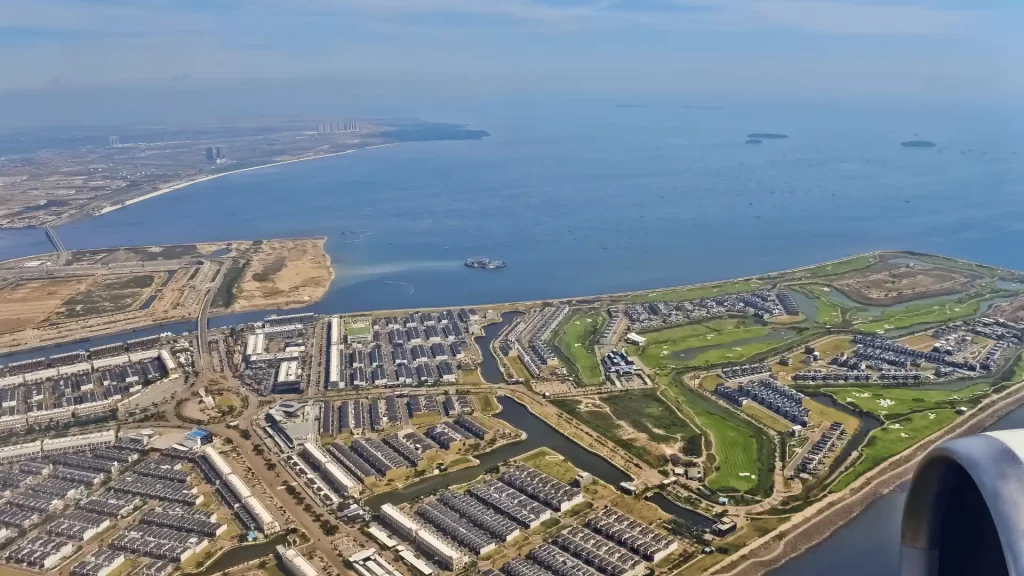
To understand the meaning of reclamation land, it is important to understand what reclamation is. Reclamation is an activity undertaken by individuals to increase the environmental and socioeconomic benefits of land resources through landfilling, land draining, or drainage. Despite the benefits of land resources for the environment and socioeconomic benefits, reclamation land can be granted Right of Management and land rights only if a reclamation permit has been obtained. There are two types of reclamation permits, which are a reclamation location permit and a reclamation implementation permit.
A reclamation location permit is valid for a period of 2 (two) years and can be extended for a maximum of 2 (two) years. Meanwhile, a reclamation implementation permit is valid for a maximum period of 5 (five) years and can be extended for a maximum of 5 (five) years. The reclamation location permit is valid until the end of the reclamation implementation permit, except if the reclamation implementation permit has not been issued, then the reclamation location permit is valid for a period of 2 (two) years from the date of issuance. The reclamation implementation permit will expire if it expires and is not extended.
The granting of reclamation permits is regulated as follows:
- Granted to central government institution, State-Owned Enterprises (“SOE“)/Regional-Owned Enterprises (“ROE“), State-Owned Legal Entities (BHMN)/Regional-Owned Legal Entities (BHMD), land bank agencies, or legal entities appointed by the central government, reclamation land is granted Right of Management or land rights, taking into account the requirements as a subject of rights.
- Granted to legal entities or individuals, reclamation land is granted land rights and/or Right of Management under the following conditions:
- for reclamation permit holders, land rights and/or land rights over the Right of Management are granted; and
- for the central government or regional government granting reclamation permits, Right of Management is granted, based on an agreement between the party receiving the reclamation permit and the central government or regional government, taking into account spatial planning provisions.
If reclamation activities are carried out without a reclamation permit, the official authorized to issue the reclamation permit will conduct technical and spatial planning studies. The impact on the reclamation land rights status will vary depending on the results of the study. If the reclamation activity:
- meets the requirements, the reclamation land becomes land directly controlled by the state, and its subsequent use, utilization, and ownership fall under the authority of the minister; or
- does not meet the requirements, the reclamation land can be returned to its original condition by the party carrying out the reclamation in accordance with the provisions of laws and regulations regarding reclamation permits.
Destroyed Land
Destroyed land is land that has changed from its original form due to natural events and cannot be identified, making it unsuitable for its intended function, use, or utilization. There are procedures for determining whether land can be categorized as destroyed. For reference, there is an article that discusses the procedures for determining desolate land in more detail, entitled “Tata Cara Penetapan Tanah Musnah” written by Mohamad Fajar Hasiolan.
Land that has been declared destroyed results in the revocation of the Right of Management and/or land rights. Holders of Right of Management and/or land rights are required to submit the land rights certificate to have the rights revoked. This registration is carried out by the Head of the Land Office in the land book, certificate, measurement letter, name list, and/or other general registers, so that the documents are no longer valid. This registration is carried out by:
- crossing out the relevant title number in the land book, certificate, measurement letter, name list, and/or other general registers; and
- recording on the amendment page of the land book and certificate “Land Rights revoked because the land has been destroyed in accordance with the Decree of the Head of the Land Office.”
For land declared destroyed but not yet registered, the decision to determine the land as destroyed is submitted to the village/sub-district head to be recorded in the village/sub-district register.
After understanding rights over land, coastal areas, small islands, reclamation, and destroyed land, it is also necessary to understand the spatial planning of a region. This is because, when referring to the definition of spatial planning, land constitutes one of its scopes. Therefore, this article will further discuss spatial planning and spatial arrangement.
Spatial Planning
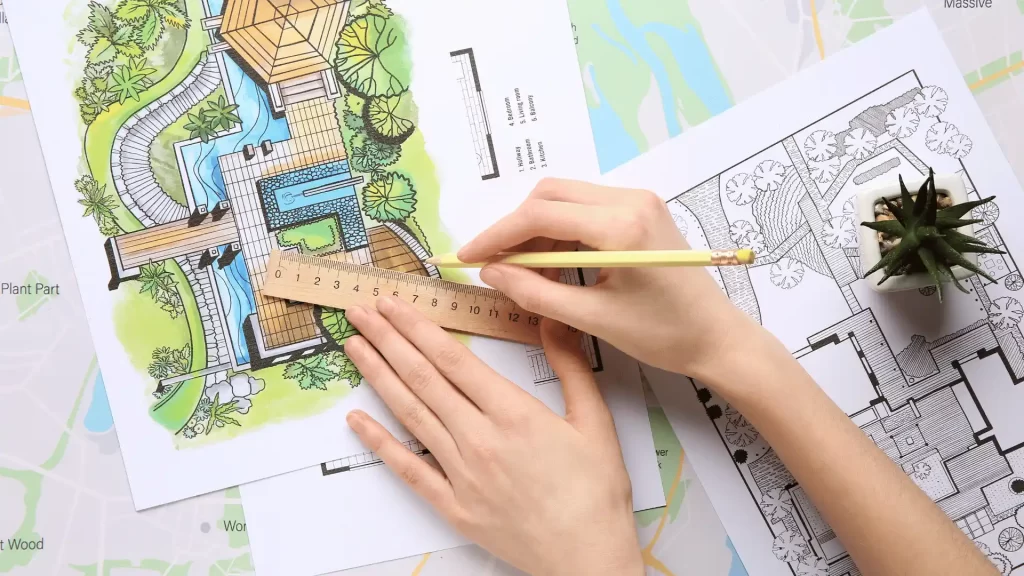
Law No. 26 of 2007 on Spatial Planning as amended by the Job Creation Law (“Spatial Planning Law”) and Government Regulation No. 21 of 2021 on the Implementation of Spatial Planning (“GR Implementation of Spatial Planning”) define space as a container encompassing land space, marine space, and air space, including space within the earth as a unified territorial entity, where humans and other living beings live, carry out activities, and maintain the continuity of life. Furthermore, the Spatial Planning Law and the GR Implementation of Spatial Planning also define spatial planning as the manifestation of spatial structure and spatial pattern. It is further explained that spatial structure is the arrangement of settlement centers and systems of infrastructure and facilities that function as support for the socio-economic activities of the community, which hierarchically have functional relationships. Meanwhile, spatial pattern is the distribution of space utilization within a region, which includes the designation of space for protected functions and the designation of space for cultural functions.
Referring A.M. Yunus Wahid, in the context of spatial arrangement, spatial planning, or more fully the regional spatial plan, functions as a means of control over the utilization of space along with the resources contained therein in accordance with their designated purposes. All of this is intended to realize a region that is safe, comfortable, productive, and sustainable.
The Government of the Republic of Indonesia is the party obliged to prepare spatial planning plans, including regional spatial plans. Specifically, the spatial planning provisions concerning the spatial plan and regional spatial plans are further explained as follows:

Regional Spatial Plan
Spatial planning is the manifestation of spatial structure and spatial pattern. In line with the definition of spatial planning, spatial planning management is defined as a system of processes for spatial planning, spatial utilization, and control of spatial utilization. Therefore, there is a provision on the Regional Spatial Plan (“RTRW”) as regulated by the laws and regulations in Indonesia.
In this context, the RTRW serves as the main reference for every development activity and spatial utilization in Indonesia. The RTRW is defined as the result of spatial planning in a particular area based on established administrative and/or functional aspects.
Basically, the RTRW is generally prepared hierarchically, consisting of the national RTRW, provincial RTRW, regency RTRW, and city RTRW. In this regard, the authority to prepare the RTRW lies with the Government of the Republic of Indonesia, with the provision that the Central Government is responsible for the national RTRW and the Regional Government is responsible for the provincial RTRW. The discussion of the draft regional regulation concerning the RTRW is carried out by stakeholders in accordance with the relevant region.
Normatively, the Spatial Planning Law regulates that the validity period of the national RTRW, provincial RTRW, and regency RTRW is 20 (twenty) years, with the provision that the RTRW may be reviewed once every 5 (five) years. For certain strategic environmental conditions related to large-scale natural disasters as determined by positive law in Indonesia, the RTRW may be reviewed more than once within a 5 (five) year period. In general, the RTRW constitutes a broad outline of the designation and utilization of land, sea, and air space.

Detailed Spatial Plan
Referring to the Spatial Planning Law, it can be understood that spatial planning results in a general spatial plan and a detailed spatial plan. The detailed spatial plan consists of:
- Island/archipelagic spatial plans, National Strategic Area Spatial Plans, Zoning Plans for Certain National Strategic Areas, Area Zoning Plans, and National Urban Area Detailed Spatial Plans, as detailed plans of the National Spatial Plan (National RTRW);
- Regency Detailed Spatial Plans (“RDTR”) as detailed plans of the Regency Spatial Plan (Regency RTRW); and
- City RDTR as detailed plans of the City Spatial Plan (City RTRW).
It should be understood that the detailed spatial plan that is prepared is used as an operational instrument of the general spatial plan.
The explanation of the RDTR is also provided in Regulation of the Minister of Agrarian Affairs and Spatial Planning/Head of the National Land Agency of the Republic of Indonesia Number 11 of 2021 concerning Procedures for the Preparation, Review, Revision, and Issuance of Substantive Approval of Provincial, Regency, and City Spatial Plans and Detailed Spatial Plans (“MR on RTRW RDTR”). The definition of RDTR is explained in the said regulation, namely that RDTR is a detailed plan regarding the spatial arrangement of a regency/city area, which is equipped with regency/city zoning regulations. Based on the explanation above, it is necessary to understand the process for the preparation of RDTR at the regency/city level, which includes:
- preparation;
- collection of data and information;
- data processing and analysis;
- formulation of concepts; and
- preparation of a draft regional head regulation on the regency/city RDTR.
It should be understood that regency/city RDTR is prepared and provided in digital form with standards determined by the central government.
In the context of land affairs and real estate, property developers are required to first ascertain whether the area in which residential areas and/or buildings will be constructed is an area which designated use is in accordance with that stipulated in the RDTR. Moreover, property developers are required to obtain a Conformity of Spatial Utilization Activities permit (“KKPR”). In relation to spatial utilization activities, property developers are therefore required to obtain KKPR.
Property developers are required to ensure that the development site is in accordance with the designated spatial use as stipulated in the Spatial Plan and the Detailed Spatial Plan.

Licensing
Permits are regulated under Government Regulation Number 28 of 2025 on the Implementation of Risk-Based Business Licensing (“GR Business Licensing”). To carry out business activities, all business actors are required to possess a business license (“Business Licensing”). Furthermore, in order to obtain a Business Licensing, at a minimum, property developers are required to fulfil basic requirements which include KKPR, environmental approval, building approval, and a certificate of proper function. This article will discuss, in a limited manner, an overview of the basic requirements consisting of KKPR, environmental approval, building approval, and the certificate of proper function.
Spatial Utilization Activity Conformity Permit
KKPR is the conformity between the planned spatial utilization activities and the spatial plan. As explained above, KKPR is one of the prerequisite documents for applying for a Business Licensing. Therefore, it is necessary to understand the stages of KKPR approval. The stages of KKPR approval consist of:
- Registration;
- Examination of the proposed space utilization activity documents;
- Assessment of the proposed space utilization activity documents; and
- Issuance of the Space Utilization Activity Approval (“PKKPR”).
At the initial stage, the business actor submits an application for KKPR approval through the Online Single Submission (“OSS”) system by completing the required documents and making payment of Non-Tax State Revenue (“PNBP”). After receiving the application submission, the OSS system conducts an examination of the conformity of the business location based on the RDTR that has been integrated into the OSS system, whereby if, based on the results of the examination and assessment, the requirements are fulfilled, the KKPR application is approved, and if the results of the examination and assessment do not fulfill the requirements, the KKPR application is rejected.

Environmental Approval
Environmental Approval is an approval that must be obtained by business actors for any business activity that has significant or non-significant impacts on the environment. Environmental Approval is granted based on the fulfillment of environmental documents in the form of Environmental Impact Analysis (“AMDAL”) and/or Environmental Management Efforts and Environmental Monitoring Efforts (“UKL-UPL”).
Each application for Environmental Approval will later be issued in the form of:
- Environmental Feasibility Decree for businesses and/or activities that have significant impacts on the environment and fall under the criteria requiring AMDAL;
- Statement of Environmental Management Commitment for businesses and/or activities that do not have significant environmental impacts but fall under the criteria requiring UKL-UPL; or
- Environmental Management Statement (“SPPL”) for businesses and/or activities that do not have significant environmental impacts and are not included in the criteria requiring AMDAL or UKL-UPL.
For environmental approval, the process is carried out through the following stages:
- Screening of the type of environmental documents and technical approval screening by the Business Actor;
- Submission of technical approval request by the Business Actor;
- Submission of environmental approval or amendment of environmental approval by the Business Actor;
- Assessment or review of environmental documents;
- Decision-making on environmental feasibility; and
- Issuance of environmental approval.
In line with the explanation above, the process of applying for and issuing Environmental Approval is carried out through the OSS system. For reference, there has been a more detailed article about the Environmental Approval in relation to building approvals entitled “Reforming Environmental Supervision and Sanctions: Key Points and Discrepancy whether Environmental Approval is Required for Building Approval” written by Ardelia Ignatius.

Building Approval
Job Creation Law introduced a change whereby, prior to its enactment, the construction of buildings required ownership of a Building Permit (“IMB”). Since the implementation of Job Creation Law, the IMB has been replaced by Building Approval (“PBG”). In this context, PBG is regulated under Law No. 28 of 2002 on Buildings as lastly amended by Job Creation Law (“Building Law”).
PBG is a permit granted to building owners to construct new buildings, modify, expand, reduce, and/or maintain buildings in accordance with building technical standards.
The construction of a building is carried out through several stages, which include planning, implementation, and supervision. In this context, the construction of the building may only proceed after obtaining the PBG.
The PBG is processed through the stages of planning consultation and issuance. The planning consultation stage includes registration, examination of compliance with technical standards, and issuance of a statement of compliance with technical standards.
At the registration stage, the business actor submits the applicant or owner’s data, building data, and technical plan documents to be examined for compliance with the provisions of laws and regulations in the field of building construction. If the documents are found to be incorrect, they are returned to the business actor for correction once within a maximum period of 5 (five) working days. If this period is exceeded or the documents still do not meet the requirements, the PBG application is declared as rejected.
Once the documents are declared correct, an examination of compliance with technical standards is conducted up to 5 (five) times within a maximum period of 26 (twenty-six) business days from the date the documents are declared correct. It should be understood that the first technical standards compliance check must be conducted no later than 3 (three) working days. The results of the examination are documented in a minutes report that includes technical considerations and conclusions.
The conclusion takes the form of a recommendation for the issuance of a statement of compliance with technical standards, which is subsequently issued along with the calculation of the technical levy. If the technical standards are not met, the conclusion contains a recommendation to reapply for PBG.
The PBG issuance stage includes the determination of the regional levy amount, payment of the regional levy, and the issuance of the PBG. The determination of the levy amount is based on the technical fee calculation produced in the previous stage. This determination must be communicated to the business actor no later than 1 (one) business day through the OSS system from the receipt of the statement of compliance with technical standards. If the levy amount cannot be determined within this timeframe, the OSS system will automatically set the levy amount. Once the levy amount is determined and payment is made, the PBG and its attached supporting documents are issued to the business actor.
Based on the explanation above, it can be understood that a PBG must be obtained before the physical construction of a building begins. It should also be noted that if a building already had an IMB before the enactment of the Job Creation Law, the building owner is not required to change it into a PBG, except if there are changes made to the existing building. This aligns with the definition of PBG as regulated in Government Regulation of the Republic of Indonesia Number 16 of 2021 concerning the Implementation Regulation of Law Number 28 of 2002 on Buildings (“GR Implementation of Building Law”) where a PBG is required when intending to construct a new building or make modifications, such as altering, expanding, or reducing the building’s structure.
If a building has obtained a PBG, but it is later found that the function of the building does not comply with the designation as stated in the PBG, the building owner may be subject to administrative sanctions, including written warnings, revocation of the PBG, and even demolition of the building.

Certificate of Proper Function
The Certificate of Proper Function (“SLF”) is a certificate issued by the Regional Government to declare the functional feasibility of a building before it can be used.
In the case of applying for an SLF, the application is submitted through Building Management Information System (SIMBG), which is integrated with OSS. The minimum requirements for applying for the issuance of an SLF include:
- The latest technical drawings of the building;
- A statement from the supervisor or Construction Management for a new building, or from a Technical Assessor for an existing building, confirming that the building has been constructed in accordance with the Building Permit (IMB) and is functionally feasible; and
- Supporting attachments stating the functional feasibility of the building.
If a building has met the requirements, the building owner can obtain an SLF issued through OSS. The issuance of the SLF includes the SLF document, attachments to the SLF document, and the SLF label. For reference, in each of the procedures for issuing KKPR, Environmental Approval, PBG, and SLF, there are some positive fictional provisions that has been discussed in a more detailed article entitled “Game-Changing Regulations: Risk-Based Licensing Regulation Brings Fresh Hope to the Property Sector” written by Yosefin Mulyaningtyas.
The SLF that has been issued has a validity period. In this case, the SLF is valid for 20 (twenty) years for single and terraced houses, and 5 (five) years for other types of buildings. However, the extension of the SLF must be preceded by a functional feasibility inspection conducted by a technical assessment service provider.
GR Implementation of Building Law also regulates administrative sanctions, whereby if the owner, manager, user, or property developer violates the provisions related to the SLF, the violator may face administrative sanctions ranging from written warnings, activity restrictions, temporary or permanent suspension, freezing of permits, revocation of PBG and SLF and also approval for the demolition of the building.
Property developers are required to fulfill the basic requirements for Business Licensing, in which are Spatial Suitability Approval, Environmental Approval, Building Approval, and Certificate of Proper Function
After outlining the basic requirements that must be fulfilled in property development activities, it is important to understand that compliance with these licensing aspects cannot be separated from the commercial and industrial implications inherent in the utilization of land rights. Hence, the following discussion will examine the commercial and industrial aspects of land rights in property development practice.
Commercial and Industrial Aspects of Land Rights
Ownership of land rights is one of the elements in land law that regulates the relationship between individuals, society, and the state with the land. Each party that holds these land rights has the right to utilize, manage, and exploit the land. The commercial aspects of each development, such as houses, condominium, and industrial estate are subject to different legal provisions.
Housing
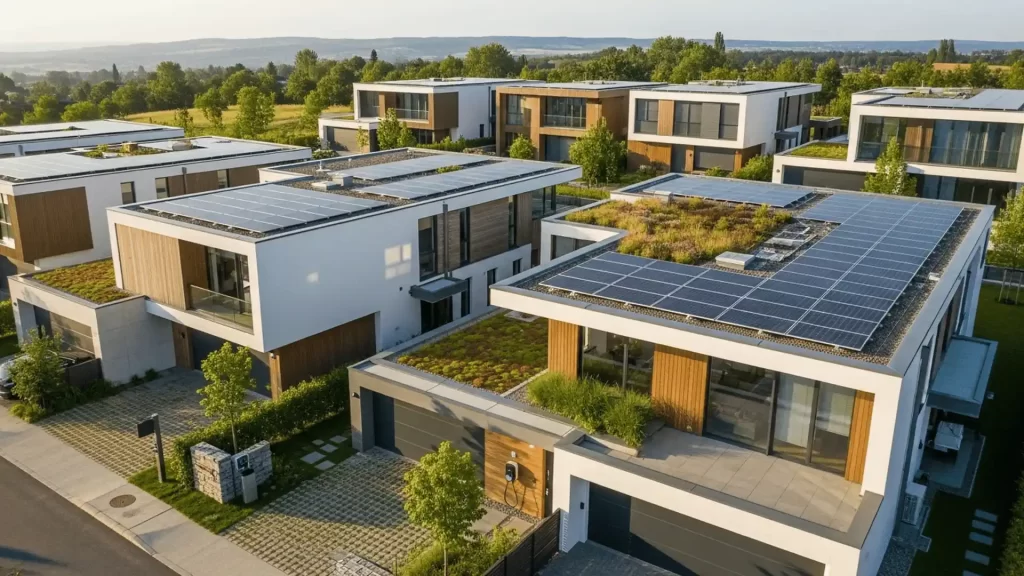
The housing development is one of the main forms of land utilization in Indonesia. The provisions related to housing are broadly regulated under Law Number 1 of 2011 concerning Housing and Settlement Areas, as lastly amended by the Job Creation Law (“Housing Law”), along with its implementing regulations. In this context, housing is defined as a collection of houses forming part of a settlement, whether urban or rural, equipped with infrastructure, facilities, and public utilities as a result of efforts to fulfil adequate housing. This means that housing development is not limited to the construction of houses but includes the overall planning of the area in accordance with spatial planning regulations.
Considering that property developers are generally legal entities, the type of land rights that can generally be used for housing development business activities is Right to Build or Right of Use.
Therefore, in practice, land control by property developers is carried out through:
- Purchase a Right of Ownership land from individual owners, which was previously converted into Right to Build, Right to Cultivate or Right of Use; or
- Cooperating with holders of Right of Management, such as local governments, where the developer may obtain Right to Build over the Right of Management for a certain period.
For property developers, the legal aspects in the housing sector do not stop at the physical construction of housing units. Legal aspects related to housing development include, among others, house ownership, house sale, housing management, and balanced housing.

House Ownership
Foreign nationals can obtain Right of Use over land in Indonesia. In the context of houses, foreign nationals can obtain Right of Use or Right of Use over Right of Ownership, which is controlled based on an agreement granting a Right of Use over Right of Ownership with a deed by a Land Deed Official, or they can also obtain Right of Use over Right of Management based on a land use agreement with the Right of Management holder. House ownership by foreign nationals can be granted with restrictions on minimum price, land area, number of land plots, and residential designation.
The provisions for foreign national ownership of houses are houses in the luxury house category, namely houses whose selling price is above 15 (fifteen) times the price of public houses set by the Central Government, 1 (one) plot of land per family, and the land area is a maximum of 2,000 (two thousand) square meters. However, in the case of foreign nationals having a positive impact on the economy and society, then the houses referred to above are permitted to be more than 1 (one) plot of land with the permission of the minister.
For example, the minimum sale price for landed house in Jakarta and Bali that can be bought by a foreigner is IDR 5 billion. For a condominium unit, the minimum sale price for Jakarta is IDR 3 billion and Bali is IDR 2 billion.

House Sale
Property developers, in selling housing units to consumers, are required to prepare several legal documents e.g., a purchase order, a Conditional Sale and Purchase Agreement (“CSPA”), and a minutes of handover. This section will then provide a general overview of the CSPA system in house sales, which consists of marketing and CSPA.
House sale is regulated in Government Regulation No. 12 of 2021 concerning the Amendment to Government Regulation No. 14 of 2016 on the Implementation of Housing and Settlement Areas (“GR Implementation of Housing and Settlement Areas”). Developers can market single houses and row houses that still under construction through the CSPA system. Developers conducting such marketing must have at least certainty of land use, certainty of land rights, certainty of house ownership status in the form of Right of Ownership certificate, Right to Build certificate, or Right of Use certificate, housing development permits, and guarantees for housing development from a guarantee institution. Property developers are required to explain the contents of the CSPA during marketing activities and provide information regarding the construction schedule, the CSPA signing schedule, the sale and purchase deed signing schedule, and the handover of the house. Payments made by prospective buyers to developers during marketing become part of the payment for the house price. The CSPA can then be carried out after the developer has fulfilled the requirements for certainty of land ownership status, the agreed matters, PBG, the availability of infrastructure, facilities, and public utilities, and the construction of at least 20% (twenty percent). For single houses or row houses, evidenced by the construction of 20% (twenty percent) of the total number of housing units and the availability of infrastructure, facilities, and public utilities in a planned housing complex. Developers may not collect more than 80% (eighty percent) of the funds from buyers before fulfilling these CSPA requirements. For reference, the CSPA content has been discussed in a more detailed article entitled “Drafting a Conditional Sale and Purchase Agreement for Housing and Condominiums: The Ultimate Checklist” written by Yosefin Mulyaningtyas and Olivia Wijaya.
Housing management
Housing management aims to maintain sustainable housing quality. This management can be carried out independently by the community and facilitated by the local government. Facilitation by the local government refers to efforts by the local government to increase community self-reliance in housing management, including through the provision of guidelines, training/seminar, and facilitation and/or assistance. Based on this, housing management remains centered on community self-reliance, while still receiving support from the local government.
In the case of housing experiencing a decline in its function as a dwelling, or what can be called slum housing, further regulations are stipulated in the GR Implementation of Housing and Settlement Areas. To prevent slum housing from occurring, prevention is implemented through supervision, control, and community empowerment, which must remain in line with technical standards. As described above, the community plays a primary role in achieving technical standards, but there is some community empowerment carried out by local governments.
Balanced Housing in House Development
Balanced housing is housing or residential areas that are built in a balanced way between simple houses, middle-class houses and luxury houses.
The provisions regarding balanced housing are intended for all people who build housing and residential areas, unless the entire area is intended for public housing.
The implementation of balanced housing has the following scales:
- Large-scale housing, consisting of at least 3,000 (three thousand) housing units; and
- Non-large-scale housing, consisting of 100 (one hundred) to 3,000 (three thousand) housing units.
The requirements for balanced housing locations are also divided, where for large-scale housing it must be carried out in 1 (one) area, while for housing development other than large-scale is carried out in 1 (one) area or not in 1 (one) area, but must still be carried out in 1 (one) district/city area.
Further, the housing classifications consist of:
- Luxury houses, namely houses with a selling price above 15 (fifteen) times the price of public housing set by the Central Government;
- Mid-range houses, namely houses with a selling price of at least 3 (three) times to 15 (fifteen) times the selling price of public housing set by the Central Government; and
- Modest houses, namely houses built on land with a floor area and selling price in accordance with statutory regulations.
The composition of houses in a housing complex with balanced housing is divided into:
- Large-scale housing development, namely 1 (one) luxury house compared to at least 2 (two) medium-sized houses and at least 3 (three) modest houses; and
- Non-large-scale housing development, consisting of:
- 1 (one) luxury house compared to at least 2 (two) medium-sized houses and at least 3 (three) modest houses;
- 1 (one) luxury house compared to at least 3 (three) modest houses; or
- 2 (two) medium-sized houses compared to at least 3 (three) modest houses, namely, 3 (three) modest houses compared to 2 (two) medium-sized houses compared to 1 (one) luxury house.
In case that the modest house referred to above cannot be built in the form of a single house or row house, then the modest house can be converted into a public condominium built in 1 (one) same area or in the form of funds for the construction of public housing. The conversion calculation in the form of funds is a managed fund or grant calculated by considering the amount of the obligation for the modest house, the selling price of the subsidized modest house set by the central government, the percentage of the cost of production to the selling price, a multiplier factor taking into account the time value of money, and management service fees. The conversion calculation in the form of funds must be submitted by the developer to the housing acceleration agency. The funds obtained from the conversion calculation are determined before the issuance of the PBG and paid to the housing acceleration agency no later than from the issuance of the PBG until the issuance of the SLF.
Condominium
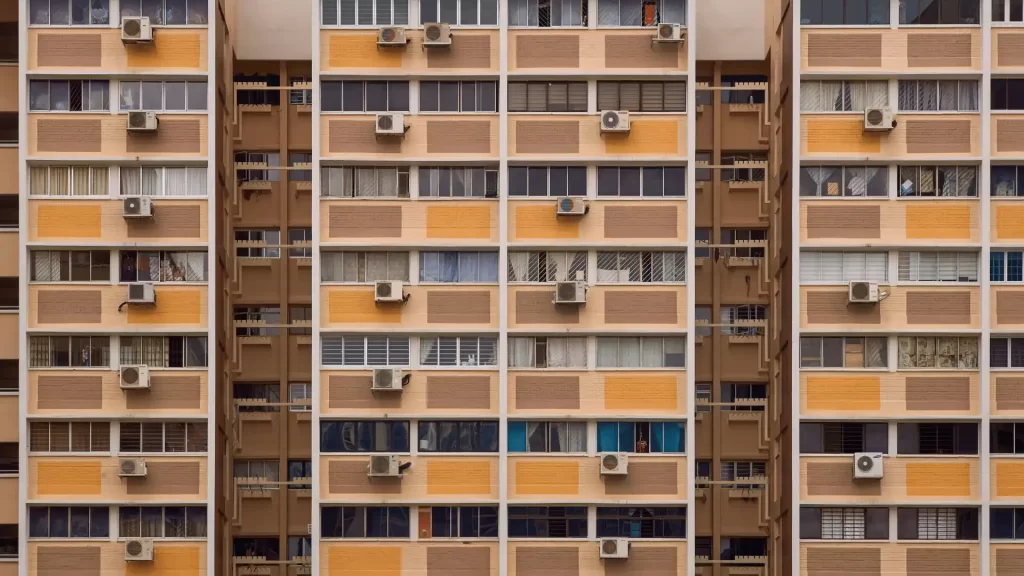
Law Number 20 of 2011 concerning Condominium , as lastly amended by the Job Creation Law (“Condominium Law”), defines an Condominium Unit as a multi-story building constructed within an environment divided into parts that are functionally structured, both horizontally and vertically, and forms a single unit, each of which can be owned and used separately, primarily as a residential place equipped with common parts, common objects, and common land. Similar to the housing section, this section will also discuss ownership of condominium units, sale of condominium unit, Association of Condominium Unit Owners and Occupants, and balanced housing.
Condominium Units Ownership
The Certificate of Ownership of a Condominium Unit (“SHMSRS”) is a proof of ownership of a condominium unit. The SHMSRS is based on a description (pertelaan) that shows the clear boundaries of each condominium unit, common areas, common objects, and common land along with a description of the Proportional Comparison Value (NPP). The description (pertelaan) of the amount of the rights to common areas, common objects, and common land for the person concerned is an inseparable part of the SHMSRS, in addition to a copy of the land book and a letter of measurement for the common land rights and a floor plan drawing at the level of the condominium unit in question that shows the condominium unit owned. In addition to the SHMSRS, proof of ownership of a condominium unit can also be in the form of a Building Ownership Certificate (“SKBG”) for the condominium unit. The Condominium Law defines the SKBG for a condominium unit as proof of ownership of a condominium unit on state/regional property in the form of land or waqaf land by way of lease. The SKBG for a condominium unit only applies to public condominium units, namely condominiums that are organized for the benefit of low-income communities. Unlike an SHMSRS, which covers common areas, common objects, and common land, an SKBG does not provide rights to common land. The condominium unit owner owns only the condominium unit, the common areas, and common objects based on the NPP. For reference, the SKBG for apartment buildings has been discussed in more detail in the article entitled “SKBG Satuan Rumah Susun” written by Eddy Leks.
The parties entitled to obtain an SHMSRS are as follows:
- Indonesian citizens;
- Indonesian legal entities;
- Foreign citizens who have permission in accordance with the provisions of the legislation;
- Foreign legal entities that have a representative office in Indonesia; or
- Representatives of foreign countries and international institutions that are present or have a representative office in Indonesia.
For Indonesian citizens wishing to own an SHMSRS, there are no specific restrictions, unlike those for foreign nationals. In principle, the requirements to hold SHMSRS will follow the requirements to hold a land right.
Foreign nationals can only obtain SHMSRS located in special economic zones, free trade zones and free ports, industrial areas, and other economic zones. What is meant by other economic zones are urban areas and/or urban support areas, tourism areas, or areas that support vertical housing development and provide economic impacts to the community. Foreign nationals who wish to own SHMSRS are required to have immigration documents in the form of a visa, passport, or residence permit issued by the authorized institution. For foreign nationals, other restrictions also apply such as regarding the minimum price, number of condominium units, and residential designation. Even if they can own SHMSRS, foreign nationals will not hold ownership of the common land in the condominium when the underlying land right is a Right to Build.

Sale of Condominium Units
In selling a condominium unit, developers must also prepare legal documents such as a purchase order, CSPA, and a minute of handover. In principle, condominium sales use the same CSPA system, consisting of marketing and CSPA, as in house sales. The same requirements for certainty regarding marketing and CSPA also apply to condominium sales.
The most obvious difference between the CSPA system for selling houses and condominium units is the starting point for marketing. While marketing for new houses can begin during the construction phase, marketing for condominium units can begin even before the construction begins. Developers conducting marketing of condominium must have at least certainty of land use, certainty of land rights, certainty of condominium unit ownership status in the form of SHMSRS, condominium development permits, and guarantees for condominium development from a guarantee institution. The CSPA can be carried out after the developer has fulfilled the requirements for certainty of land ownership status, the agreed matters, PBG, the availability of infrastructure, facilities, and public utilities, and the construction of at least 20% (twenty percent). For condominium units, the construction requirement of at least 20% (twenty percent) is from the construction volume of the condominium building being marketed.
Association of Condominium Unit Owners and Occupants
The Association of Condominium Unit Owners and Occupants (“PPPSRS”) is a legal entity whose members are owners or occupants, in this case the intended ones are the owners or occupants of the condominium units. The explanation regarding the PPPSRS is largely regulated in the Regulation of the Minister of Housing and Settlement Areas of the Republic of Indonesia Number 4 of 2025 concerning the Management of Owned Condominiums and the Association of Condominium Unit Owners and Occupants of Condominium Units (“MR on Condominium Management and PPPSRS”). It is important to understand that the PPPSRS is a legal entity that is obliged to manage the interests of occupants related to the management. It is mandatory for owners to establish a PPPSRS, the formation of which must be facilitated by the developer no later than 1 (one) year after the first handover of the condominium unit to the owner. To carry out this obligation, the PPPSRS can carry out management independently, form or appoint a manager. Once formed, the developer immediately hands over the management of common areas, common objects, and common land to PPPSRS.
The establishment of the PPPSRS is carried out by drafting a deed of establishment and accompany by the articles of association (AD/ART) before a notary. The AD/ART contains the basic rules of the PPPSRS organization regarding the management of common areas, common objects, common land, and occupancy.
The organizational structure of the PPPSRS in carrying out its obligations consists of members and administrators. The official term for administrators is only 3 (three) years and may be re-elected for one further term. The PPPSRS management structure is divided into two: residential function management and mixed function management. Each management consists of an administrator and supervisors. The supervisors consist of an odd number of 3 (three) people, consisting of a chairperson, a secretary, and 1 (one) owner.
The residential function management structure consists of a chairperson, secretary, treasurer, a member for management supervision, and a member for the residential function. The mixed function management structure consists of the PPPSRS, the PPPSRS residential function subsection, and the PPPSRS non-residential function subsection.
Balanced Housing in Condominium
Talking about balanced housing for condominium, the definition and concept are the same as balanced housing for housing. In the case of developers building commercial condominiums, they are required to build public condominiums at least 20% (twenty percent) of the total floors of the commercial condominiums being built, and can be done in the same area, or outside the residential area or commercial condominium area, but still within the same district/city area. However, it should be underlined that these location provisions cannot be applied in DKI Jakarta, because specifically for the DKI Jakarta area, construction can be done outside the same city area but still within the DKI Jakarta province.

Industrial Estate
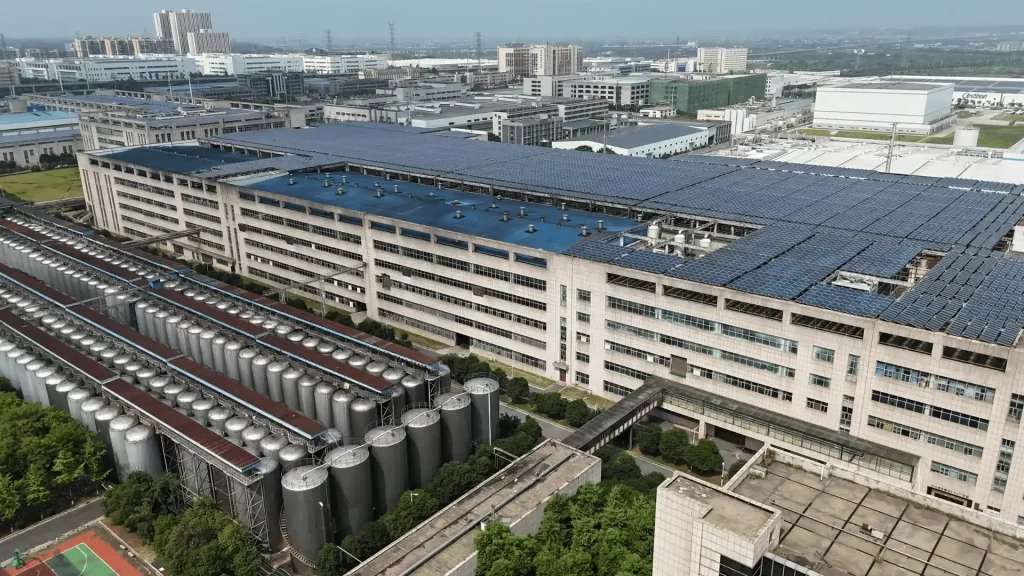
In the context of property development within industrial area, government of Republic of Indonesia has regulated such matters under Law Number 3 of 2014 concerning Industry as amended by the Job Creation Law (“Industry Law”), and Government Regulation No. 20 of 2024 on Industrial Zoning (“GR Industrial Zoning”). An Industrial Estate is defined as an area where industrial activities are concentrated which is equipped with supporting facilities and infrastructure developed and managed by the Industrial Estate Company. As for the Industrial Estate Company is a company that seeks the development and management of industrial estates.
Industrial Estate Companies may provide supporting infrastructure and facilities within the Industrial Estate. This supporting infrastructure may include housing, education and training, research and development, healthcare, and/or firefighting. Supporting facilities may include hotels and restaurants, business centers, sports facilities, places of worship, and/or banking facilities. Industrial Estate Companies may choose to collaborate with other parties in providing this supporting infrastructure and facilities.
Furthermore, Industrial Estate Company may obtain a Right to Build over the land to be utilized and developed, after obtaining a Business Licensing for industrial estate business activities. The Right to Build can be divided into Right to Build for each plot. In particular, if the Industrial Estate Company is an SOE or an ROE, such SOE or ROE may be granted a Right of Management, upon which a Right to Build can be subsequently granted.

Utilization, Maintenance, and Upkeep of Buildings
In the process of constructing a building, Article 13 letter c of the GR Implementation Building Law states that in erecting a building, technical standards must be prepared, one of which is the standard for building utilization. The Building Law and the GR Implementation Building Law distinguish between utilization, maintenance, and upkeep.
Utilization is the activity of using a building in accordance with its designated function, including maintenance, care, and periodic inspection activities. Maintenance refers to efforts undertaken to preserve the reliability of a building and its supporting infrastructure and facilities so that it continuously meets functional fitness requirements. Upkeep, on the other hand, involves the repair and/or replacement of building elements, components, construction materials, and/or supporting infrastructure and facilities to ensure the continued functional fitness of the building. Despite their distinct definitions, utilization, maintenance, and upkeep constitute an integrated and inseparable framework, as each function complements and reinforces the others.
The utilization of a building is carried out through a division responsible for the maintenance and upkeep of the building, as well as periodic inspections, or through service providers competent in their respective fields. In line with this, the results of the building utilization stage consist of:
- A documented plan for building maintenance, upkeep, and periodic inspections, including regular reports;
- A practical user manual for owners and occupants; and
- Documentation of all utilization activities.
Furthermore, building maintenance and care activities aim to ensure that the building and its infrastructure and facilities remain functional, where such maintenance and care activities are carried out by the building owner or manager. In line with this, maintenance activities include:
- Procedures and methods for building maintenance and care;
- Work programs for building maintenance and care;
- Equipment and tools for building maintenance and care; and
- Standards and performance of building maintenance and care.
Additionally, upkeep activities include repairs and/or replacement of building parts, components, construction materials, and supporting facilities, based on the building’s technical maintenance plan and with reference to construction implementation documents. It is important to note that upkeep must take into account the level of building damage and the elements to be modified or repaired.
Based on the above, in the context of real estate, the owner or building management is obligated to carry out the utilization, maintenance, and upkeep of building that have been constructed. This obligation constitutes a form of responsibility of the owner or building manager in carry out the building’s operational activities
In closing, understanding the fundamentals of real estate law in Indonesia is not just a legal necessity but a practical advantage. From navigating land titles and ownership restrictions to ensuring compliance with regulatory and transactional requirements, a clear grasp of the legal framework helps reduce risk and supports informed decision-making. As Indonesia’s property market continues to evolve, staying aware of current laws and procedures will enable investors, developers, and property owners to approach transactions with greater confidence, clarity, and long-term security.
Author
Yosefin started her professional career as a litigation Lawyer at Kantor Hukum Tirta & mitra, and SKY & Partners Law Office. She expanded her experience to PT Sarana Pactindo and PAC Group, an IT banking company group, as Corporate IT Legal. Yosefin joined Leks&Co as Mid-Level Associate in 2024 after obtaining a Master’s degree from University of Groningen, The Netherlands.


Mochamad Fahmi T. started his professional career at several prominent law firms in Indonesia, where he developed experience in general corporate, employment, and licensing matters. He has been involved in various corporate transactions, legal due diligence processes, and company liquidation matters. Fahmi obtained his Bachelor of Laws degree from Trisakti University and joined Leks&Co in October 2025.

Raja Salomo is an intern at Leks&Co. He completed his Bachelor of Laws degree at Universitas Gadjah Mada. During his studies, he was active in student organizations, participated in several research and writing programs conducted by the university, and also undertook internships. At Leks&Co, he is assigned to perform legal writing, conduct legal research, and assist with ongoing matters.
Editor

Dr Eddy Marek Leks, FCIArb, FSIArb, is the founder and managing partner of Leks&Co. He has obtained his doctorate degree in philosophy (Jurisprudence) and has been practising law for more than 20 years and is a registered arbitrator of BANI Arbitration Centre, Singapore Institute of Arbitrators, and APIAC. Aside to his practice, the author and editor of several legal books. He led the contribution on the ICLG Construction and Engineering Law 2023 and ICLG International Arbitration 2024 as well as Construction Arbitration by Global Arbitration Review. He was requested as a legal expert on contract/commercial law and real estate law before the court.
Contact Us for Inquiries
If you have any queries, you may contact us through query@lekslawyer.com, visit our website www.lekslawyer.com or visit our blog.lekslawyer.com, real estate law blogs i.e., www.hukumproperti.com and www.indonesiarealestatelaw.com
Sources:
Laws and Regulation
- Law number 6 of 2023 concerning the ratification of Government Regulation in lieu of Law No. 2 of 2022 concerning Job Creation into Law
- Law Number 3 of 2014 concerning Industry
- Law Number 1 of 2014 concerning Amendments to Law Number 27 of 2007 concerning Management of Coastal Areas and Small Islands
- Law No. 20 of 2011 concerning Condominium Law
- Law Number 1 of 2011 concerning Housing and Settlement Areas
- Law No. 26 of 2007 concerning Spatial Planning
- Law No. 28 of 2002 concerning Building
- Law Number 4 of 1996 concerning Mortgage Rights
- Law number 5 of 1960 concerning Basic Agrarian Law
- Government Regulation Number 28 of 2025 concerning the Implementation of Risk Based Business Licensing
- Government Regulation no. 20 of 2024 concerning Industrial Zoning
- Government Regulation No. 21 of 2021 concerning the Implementation of Spatial Planning
- Government Regulation Number 18 of 2021 concerning Rights of Management, Land Rights, Condominium Units, and Land Registration
- Government Regulation of the Republic of Indonesia Number 16 of 2021 concerning the Implementation Regulation of Law Number 28 of 2002 on Buildings
- Government Regulation No. 12 of 2021 on the Amendment to Government Regulation Number 14 of 2016 concerning the Implementation of Housing and Residential Areas
- Government Regulation No. 16 of 2004 concerning Land Management
- Presidential Regulation Number 122 of 2012 concerning Reclamation in Coastal Areas and Small Islands
- Regulation of the Minister of Housing and Settlement Areas of the Republic of Indonesia Number 4 of 2025 concerning the Management of Owned Condominiums and the Association of Condominium Unit Owners and Occupants of Condominium Units
- Regulation of the Minister of Immigration and Corrections of the Republic of Indonesia Number 3 of 2025 concerning Visas, Residence Permits, Facilities and Conveniences, as well as Immigration Supervision for the Diaspora
- Regulation of the Minister of Public Works and Public Housing Number 12 of 2024 concerning Proof of Building Ownership Certificates
- Regulation of the Minister of Agrarian Affairs and Spatial Planning/Head of the National Land Agency of the Republic of Indonesia Number 3 of 2024 concerning Amendments to the Regulation of the Minister of Agrarian Affairs and Spatial Planning/Head of the National Land Agency Number 17 of 2021 concerning Procedures for Determining Destroyed Land
- Regulation of the Minister of Agrarian Affairs and Spatial Planning/ National Land Agency No. 18 of 2021 concerning Procedures for Determining Right of Management and Land Rights
- Regulation of the Minister of Public Works and Public Housing Number 17 of 2021 concerning the Form and Procedures for Issuing a Building Ownership Certificate for a Condominium Unit
- Regulation of the Minister of Agrarian and Spatial Planning/ National Land Agency No. 11 of 2021 concerning Procedures for the Preparation, Review, Revision and Issuance of Approval of the Substance of Spatial Plans for Provincial, Regency, City and Detailed Spatial Plans
- Regulation of the Minister of Maritime Affairs and Fisheries Number 54/PERMEN-KP/2020 of 2020 concerning Location Permits, Management Permits and Marine Location Permits
- Regulation of the Minister of Public Works and Public Housing No. 19/PRT/M/2018 concerning the Implementation of Building Construction Permits and Building Function Feasibility Certificates through Integrated Electronic Business Licensing Services
- Regulation of the Minister of Agrarian Affairs and Spatial Planning/Head of the National Land Agency of the Republic of Indonesia Number 17 of 2016 concerning Land Management in Coastal Areas and Small Islands
- Regulation of the Minister of Public Housing of the Republic of Indonesia Number 10 of 2012 concerning the Implementation of Housing and Residential Areas with Balanced Housing as amended by Regulation of the Minister of Public Housing of the Republic of Indonesia Number 07 of 2013
- Regulation of the Minister of Public Works Number: 24/PRT/M/2008 concerning Guidelines for Building Maintenance and Care
- Decision of the Minister of Agrarian and Spatial Planning/Head of the National Land Agency of the Republic of Indonesia Number 1241/SK-HK.02/IX/2022
Book
Wahid, A. M. Y. (2014). Pengantar Tata Ruang. First edition, May 2014. Jakarta: Prenadamedia Group.