Articles
Government Regulation Number 44 of 1994 on Occupancy of Home by non Owner.

Government Regulation Number 44 of 1994 on Occupancy of Home by non Owner.

Background

The purpose of the issuance of Government Regulation Number 44 of 1994 on Occupancy of Home by Non-Owner (“GR No. 44/1994”) is made to ensure fairness and legal certainty of the owner, renters/lessee or occupant in the use of the house and to implement the provisions of Article 12 and Article 13 of Law Number 4 of 1992 on Housing and Residential (“Housing and Residential Law”). This Housing and Residential Law is revoked and replaced by Law Number 1 of 2011 on Housing and Residential Area (“Housing and Residential Area Law”). On this day, GR No.44/1994 is still valid and it has revoked the Government Regulation Number 17 of 1963 on the Principles of Implementation of Government Regulation in Lieu of Law on Permanent Housing (“GR No. 17/1963”) and Government Regulation Number 49 of 1963 on Relations of Housing Operating Lease (“GR No. 49/1963”) as amended by Government Regulation Number 55 of 1981 (“GR No. 55/1981”) and all their implementing regulations so long they regulate the lease of a house.

Contents of GR No. 44/1994.

House is a building that serves as a residence or dwelling and means of fostering family (Article 1 paragraph (3) No. 44/1994). House can be occupied through lease. Under Article 1 paragraph (3) GR No. 44/1994 it is stated that leasing is a condition where the house is occupied not by the owner based on the lease agreement. Further, leasing is based on a written agreement between the landlord and tenant. It is regulated that a house that is in a dispute shall not be leased (Article 4 paragraph (1) & (3) GR No. 44/1994).

If a house is rented out over the land that is owned by other party, then under Article 4 paragraph (1), the leasing can be performed after obtaining the consent of the owner of the land and the approval must be in writing (Article 5 paragraph (1) & (3) GR No. 44/1994). With regards to the amount of rent fees, Article 17 GR No.44/1994 states that it is based on the agreement between the owner and the tenant.

GR No. 44/1994 also regulates the occupancy of house that is made not through a lease. Under Article 14, Article 15 and Article 16, it is stated that the occupancy of house that is not through a lease must be based on a written agreement between the owner and the tenant.

The GR No. 44/1994 was enacted on the 26 December 1994.

read more
Adjudication of  Land Registration

Adjudication of Land Registration

Definition of adjudication based on Article 1 point 8 of Government Regulation Number 24 of 1997 on Land Registration (“GR No.24/1997″) is “activity which is performed in the process of land registration for the first time, including collection and determination of the fact of the physical data and juridical data concerning one or more objects of land registration for the purposes of its registration”. Adjudication of land registration activities are special procedures performed for granting legal status of parts of land to the actual owner.

On the implementation of systematic land registration, which is generally in large-scale and massive, then to implement it, the Head of the Land Office is assisted by the Adjudication Committee that was formed specifically for that by the Minister or appointed officer, and thus the routine duties of the land office are not disrupted. In performing its duties, the Adjudication Committee is assisted by units of juridical and administrative tasks, units of collection of juridical data and units of administrative task where their duties, the composition, and the activity are regulated by the Minister.

Essentially, adjudication duties are investigation task to examine and seek for true formal evidence, that is juridical initial data which is owned by holder of land rights, and justification task, that makes determination and ratification of evidence which is already examined.

Even though, the actual duty of adjudication is actually a task of judicial institution that is to give a decision or judgment., but in the land registration, the adjudication duty is given to the government as an executive.

The adjudication of land registration activities, if managed seriously will support the acceleration of land registration and to ensure the legal certainty.

Sofie Widyana P.

read more
The Legal Status of Parking Space Under Condominium Law

The Legal Status of Parking Space Under Condominium Law

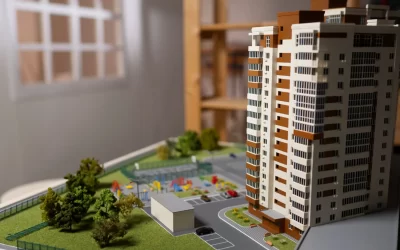
Condominium is a multilevel building which is built in an area that is divided into sections which are structured functionally, whether horizontally or vertically that constitutes as units in which each can be owned and used separate
ly, mainly for housing complemented with common equipment (bagian bersama), common facility (benda bersama) and common land (tanah bersama). Condominium is regulated in the Law Number 20 of 2011 on Condominium (“Law No. 20/2011”).

Land on where the building of Condominium stands is a common land. According to the law, common land is a piece of land used under an undivided common right, which is a Condominium building over it, determined in accordance with the building license.

According to Article 1 point 5 and 6 of Law no. 20/2011 common equipment is part of Condominium that is undividedly owned for common use, in a unified function of a Condominium. The examples of these are foundation, column, wall, floor, block, roof, stair, pipes, electricity system, gas, telecommunication and public area of a Condominium. Then, common facility is defined as a thing that does not form part of a Condominium, but jointly owned undividedly, for common use. The examples of these are park, landscaping, social building, religious building, playground, and parking space which is separated or integrated with the structure of Condominium building. Accordingly, based on the definitions set out above, of parking space is regarded as a common facility .

read more
Land Registration Activity

Land Registration Activity

Background

Definition of land registration in Government Regulation Number 24 of 1997 on Land Registration (“GR 24/1997”) constitutes perfection of scope of the land registration based on Article 19 paragraph (2) of Law Number 5 of 1960 on the Principles Provision of Agrarian (“Agrarian Law”) which includes; measurement, mapping, land records, registration and transfer of right of land and granting of evidence instrument of right as strong evidence.

Further provisions of land registration activities are regulated in GR 24/1997, which include:

1. Land Registration for the First Time ( Opzet or Initial Registration)

Land registration for the first time is the activity of land registration for the object of land that has not been registered based on Government Regulation Number 10 of1961 (“GR 10/1961”) or GR 24/1997. Land registration for the first time is performed through land registration systematically and sporadically. Land registration systematically is defined as activity of land registration for the first time simultaneously including all object of land registration that has not been registered in area or part of area of a rural/village (Article 1 paragraph 10 GR 24/1997). While, land registration sporadically is land registration activity for the first time concerning one or some object of land registration in area or part of area of a rural/village (Article 1 point 11 GR 24/1997).

Land registration activities for the first time, include:

a. Collecting and processing of physical data

1. Preparation of base map registration;

2. Registration of land boundary areas;

3. Measurement and mapping of land areas and making registration map;

4. Preparation of land registers;

5. Preparation of letter of measurement;

b. Evidence of rights and its records, including:

1. evidence of new rights

2. evidence of old right

c. The maintenance of land registration data activities.

d. Presentation of the general register and document

e. Activity of land registration data maintenance.

2. Maintenance of Land Registration Data Activities (Bijhouding atau Maintenance)

This is the land registration activity to adjust the physical data and juridical data in maps of registration, land register, name register, letter of measurement register, land records, and certificate with the changes that happen later on (Article 1 point 12 of GR 24/1997).

Based on Article 36 of GR 24/1997, the maintenance of land registration data is performed if there is a change of physical data or juridical data of land registration object that has been registered. Physically data changes occured if there is segregation, separation, or merging of areas of land that have been registered. Juridical data changes occured for instance if there is an encumbrance or or transfer of right over of land areas that have been registered.

The relevant right holder shall register the change of physical data or juridical data to the Land Office and the district/local city to be recorded in the book of land.

Activity of maintenance of land registration data, includes:

a. Registration of transfer and imposition of rights.

1. Transfers of right through auction;

2. Transfer of right due to inheritance;

3. Transfer of right due to merger or

consolidation or merger of limited

liability companies or cooperative;

4. Imposition of right;

5. Rejection of registration transfer and

imposition of right.

b. Registration of change of other land registration data, including:

1. Extension of the period of right of land;

2. Segregation, separation, and merging

of area of land;

3. Distribution of joint right;

4. Abolishment of right of land and ownership rights of condominium units.

5. Transfer and abolishment of mortgage;

6. Changes of land registration data based

on judgment or court decision.

7. Changes of name

Sofie Widyana P.

read more