

In the face of rapid urbanization, maintaining a balance between infrastructure growth and environmental preservation has become a critical challenge for Indonesian cities. This article explores how Indonesia spatial planning framework legally mandates a 30% green open space allocation to ensure sustainable urban development.
Table of Contents
Part I: Green Open Spaces Legal Framework
The provision of green open space is not merely a spatial planning obligation, but also an instrument of environmental protection
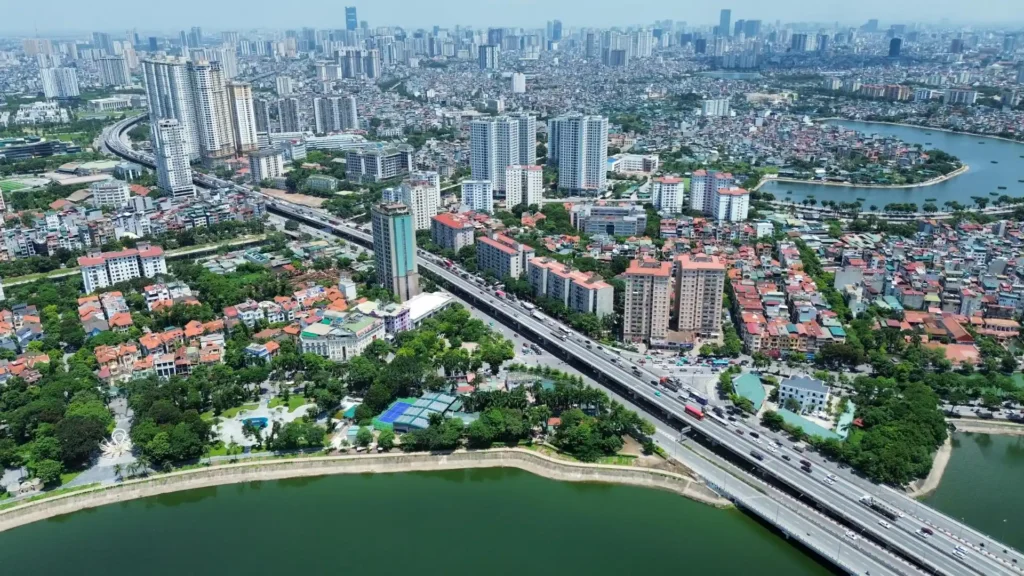
In pursuing sustainable development, the government must ensure the provision of Green Open Space/Ruang Terbuka Hijau (“RTH”) as an integral component of spatial planning and land-use control. Rapid urbanization, however, has led to a decline in the availability of RTH across various cities in Indonesia. At the same time, many Indonesian cities have yet to provide adequate RTH, both in terms of quality and quantity, while increasing urban activities continue to heighten the demand for RTH, which plays a vital role in supporting urban life and environmental sustainability.
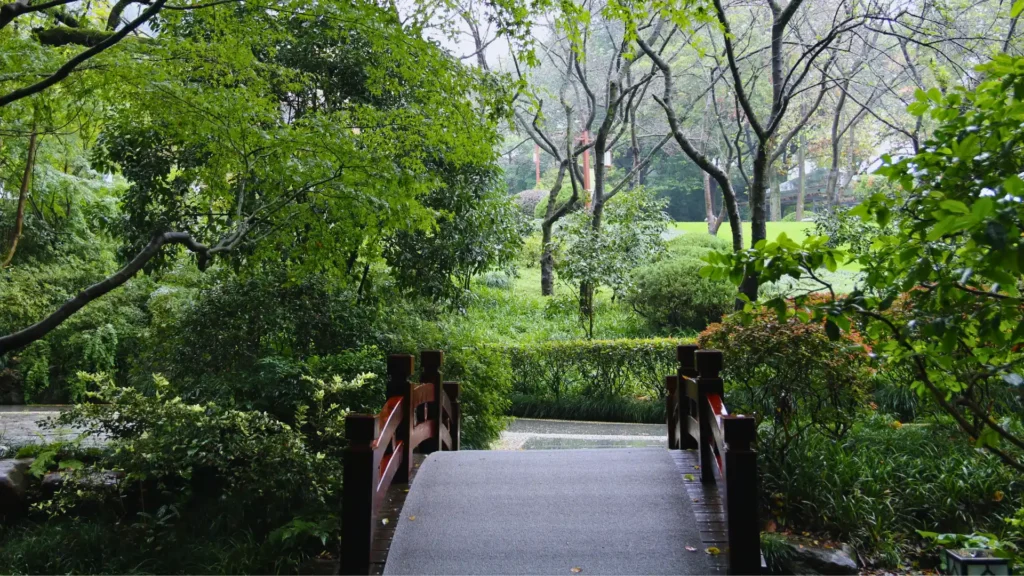
RTH is defined as an elongated and/or clustered area whose use is predominantly open and serves as a place for vegetation to grow, whether naturally occurring or intentionally planted. The functions of RTH in spatial planning consist of an ecological function as its primary (intrinsic) function, as well as supplementary (extrinsic) functions, including socio-cultural, aesthetic, and economic functions. Law Number 26 of 2007 on Spatial Planning (“Spatial Planning Law”) provides that at least 30% of a city’s total area must be allocated for the provision of RTH.
Read More: Alteration of Spatial Zoning in DKI Jakarta
The provision of RTH is one of the spatial planning instruments aimed at maintaining a balance between development and environmental preservation in order to achieve sustainable development that benefits not only the present society but also future generations.
This article is the first part of a series of articles discussing the green open space requirements and its legal implications. In this first part, this article examines one principal issue, namely, the regulatory framework of RTH equivalent to 30% of a city’s total area. The second part of this article series discusses the implementation of RTH in Indonesia, particularly the responsibility of both the government and the community in providing RTH, as well as the actual conditions in its implementation.
The final part of this series analyses the legal implications of failing to meet the 30% RTH provision requirement and examines case studies.
Green Open Space Legal Framework
At least 30% of a city’s total area must be allocated as green open spaces
The regulation of RTH and the proportion of its provision in Indonesia is primarily governed by the Spatial Planning Law. Under this law, RTH is classified into two categories, namely public RTH and private RTH.
The regulatory framework governing RTH is also closely linked to Law Number 32 of 2009 on Environmental Protection and Management, as amended by Law Number 6 of 2023 on the Stipulation of Government Regulation in Lieu of Law Number 2 of 2022 on Job Creation into Law (“Environmental Law”). This relationship is reflected in the function of RTH as an instrument for maintaining environmental carrying capacity and supporting the implementation of the principles of sustainability and sustainable development, as well as the precautionary principle in spatial utilization.
Furthermore, the implementation of spatial planning is governed by Government Regulation Number 21 of 2021 on the Implementation of Spatial Planning (“GR 21/2021”), which regulates the administration of spatial planning, the control of spatial utilization, and the integration of RTH into Regional Spatial Plan (“RTRW”) and Detailed Spatial Plan (“RDTR”). One of the most important regulations governing the technical implementation of RTH is the Minister of Agrarian Affairs and Spatial Planning/Head of the National Land Agency Regulation Number 14 of 2022 on the Provision and Utilization of Green Open Space (“ATR/BPN Reg. on the Provision and Utilization of RTH”). This regulation sets out the types of RTH, mechanisms for the provision of RTH, the roles and responsibilities of the government, as well as the utilization and protection of RTH.
As stipulated under Article 29 paragraph (2) of the Spatial Planning Law, the proportion of RTH within an urban area must constitute at least 30% of the city’s total area. Of this proportion, at least 20% must be allocated to public RTH, while the remaining 10% is designated for private RTH.
Read More: Can the Space be Owned?
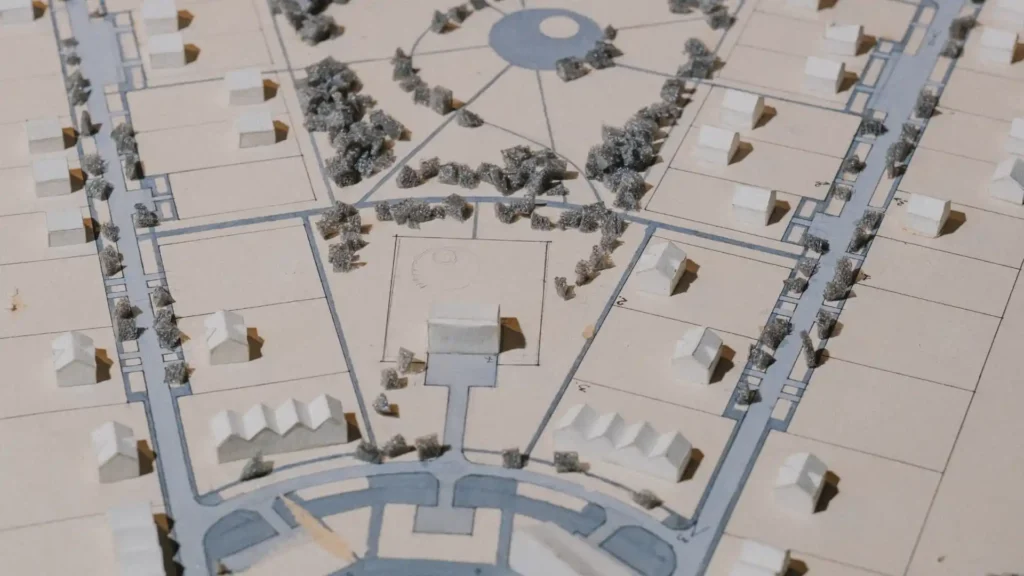
The regulation of RTH is not limited to the Spatial Planning Law, GR 21/2021, and ATR/BPN Reg. on the Provision and Utilization of RTH. Further regulations on RTH and the implementation of the statutory requirement that at least 30% of a city’s total area be allocated as RTH are stipulated in various implementing regulations. For instance, Presidential Regulation No. 60 of 2020 on Spatial Plan for the Urban Area of Jakarta, Bogor, Depok, Tangerang, Bekasi, Puncak, and Cianjur (“PR 60/2020”). This regulation governs the provision of RTH within core urban areas, their surrounding areas, and designated development zones.
In addition, regional governments are vested with the authority to regulate RTH within their respective jurisdictions. For example, the Provincial Government of the Special Capital Region of Jakarta has enacted several regulations on RTH. Among the key regional regulations is the Governor Regulation of Special Capital Region of Jakarta No. 31 of 2022 on Detailed Spatial for the Planning Area of the Special Capital Region of Jakarta Province (“Jakarta Governor Reg. No. 31/2022”), which regulates the spatial structure plan, zoning regulations, and cultural heritage preservation zones.
Read More: Procedure on Review of Regional Spatial Plan
The regulation of RTH in Jakarta is not limited to RDTR. The Provincial Government of the Special Capital Region of Jakarta has also enacted the Governor Regulation No. 9 of 2022 on Green Open Space (“Jakarta Governor Reg. No. 9/2022”), which specifically regulates the administration of RTH, strategic policies, as well as supervision, monitoring, and evaluation mechanisms.
Accordingly, Indonesia has established a relatively comprehensive legal framework governing the provision of RTH, ranging from statutory laws to implementing regulations. This framework reflects the recognition of RTH as an important instrument for maintaining a balance between development and environmental preservation. Nevertheless, the effectiveness of this regulatory framework ultimately depends not only on the existence of legal norms, but also on the effectiveness of their implementation at the regional level.
Conclusion
The obligation to provide RTH constitutes an important component of Indonesia’s spatial planning framework and serves to maintain environmental sustainability within urban areas. Indonesian law requires that at least 30% of a city’s total area be allocated to RTH. In the next part of this article examines how the comprehensive legal regulations regarding RTH are implemented legally and in practice, as well as the responsibility of both the government and the community in providing RTH. This will determine whether the implementation of the law regarding RTH has met and is evenly distributed across cities in Indonesia.
Read The Second Part: The Crucial Guide to Indonesia Spatial Planning and Green Open Space Law (Second Part)
Author

Aji joined Leks&Co as an Associate in 2026, having previously interned at the firm and later pursuing his master’s degree at Queen Mary University of London, United Kingdom, specializing in Commercial and Corporate Law. He began his career as a legal intern at PT Timah Tbk and expanded his experience in the United Kingdom as a Project Policies Analyst at qLegal. He has also previously worked at several law firms, contributing to general commercial and corporate matters, commercial dispute resolution, bankruptcy and restructuring, and legal due diligence.


Editor

Dr Eddy Marek Leks, FCIArb, FSIArb, is the founder and managing partner of Leks&Co. He has obtained his doctorate degree in philosophy (Jurisprudence) and has been practising law for more than 20 years and is a registered arbitrator of BANI Arbitration Centre, Singapore Institute of Arbitrators, and APIAC. Aside to his practice, the author and editor of several legal books. He led the contribution on the ICLG Construction and Engineering Law 2023 and ICLG International Arbitration 2024 as well as Construction Arbitration by Global Arbitration Review. He was requested as a legal expert on contract/commercial law and real estate law before the court.
Contact Us for Inquiries
If you have any queries, you may contact us through query@lekslawyer.com, visit our website www.lekslawyer.com or visit our blog.lekslawyer.com, real estate law blogs i.e., www.hukumproperti.com and www.indonesiarealestatelaw.com
Sources:
- Law Number 26 of 2007 on Spatial Planning (“Spatial Planning Law”) https://regulasi.hukumproperti.com/uu-no-26-tahun-2007-tentang-penataan-ruang-dalam-satu-naskah/
- Law No. 32 of 2009 on Environmental Protection and Management as amended by Law No. 6 of 2023 on Stipulation of Government Regulation in Lieu of Law No. 2 of 2022 on Job Creation (“Environmental Law”) https://regulasi.hukumproperti.com/uu-no-32-tahun-2009-tentang-perlindungan-dan-pengelolaan-lingkungan-hidup-dalam-satu-naskah/
- Government Regulation Number 21 of 2021 on the Implementation of Spatial Planning (“GR 21/2021”) https://regulasi.hukumproperti.com/peraturan-pemerintah-republik-indonesia-nomor-21-tahun-2021/
- Minister of Agrarian Affairs and Spatial Planning/Head of the National Land Agency Regulation Number 14 of 2022 on the Provision and Utilization of Green Open Space (“ATR/BPN Reg. on the Provision and Utilization of RTH”). https://regulasi.hukumproperti.com/peraturan-menteri-agraria-dan-tata-ruang-kepala-badan-pertanahan-nasional-republik-indonesia-nomor-14-tahun-2022/
- Presidential Regulation No. 60 of 2020 on Spatial Plan for the Urban Area of Jakarta, Bogor, Depok, Tangerang, Bekasi, Puncak, and Cianjur (“PR 60/2020”) https://regulasi.hukumproperti.com/peraturan-presiden-republik-indonesia-nomor-60-tahun-2020/
- Governor Regulation of Special Capital Region of Jakarta No. 31 of 2022 on Detailed Spatial for the Planning Area of the Special Capital Region of Jakarta Province (“Jakarta Governor Reg. No. 31/2022”) https://peraturan.bpk.go.id/Details/228166/pergub-prov-dki-jakarta-no-31-tahun-2022
- Governor Regulation No. 9 of 2022 on Green Open Space (“Jakarta Governor Reg. No. 9/2022”) https://regulasi.hukumproperti.com/peraturan-gubernur-pergub-provinsi-dki-jakarta-nomor-9-tahun-2022/
- June Ekawati, Rubi Ari Musaddad, Putri Nur Ajizah, Syarif Fauzan, Imas Eliani, Tate Wijaya, Muhammad Zulfikar, dan Muhammad Wilman Fadlirrahman. “Penerapan Fungsi pada Desain Ruang Terbuka Hijau untuk Kota Berkelanjutan,” Jurnal Permukiman, Vol 20 No. 2, November 2025 https://doi.org/10.31815/jp.2025.20.61-74